Johannes.
I control things that move —
in system theory, proven in the real world.
Vehicle systems engineer and PhD in control & cyber-physical systems, currently based in Irvine, California — writing the control software that decides where the heat goes in a car.
Four stops on the car
— all for a cleaner tomorrow ☺
Controls & optimization
Real-time mixed-integer MPC that picks both the valve positions and the power levels.
Thermal & energy systems
Heat pumps, refrigerant circuits, battery and cabin climate — where range is won or lost in winter.
Embedded software
Production C code for climate control units — from function design through calibration to vehicle tests.
Research & patents
A dissertation, journal manuscripts and 13 patent publications in vehicle thermal management.
The mode optimization strategy
Need to optimize a mode-dependent mixed-integer problem, in real time? Use the mode optimization strategy.
An electric car's coolant circuit has switching valves. Each valve combination creates a different operating mode: the battery can share a loop with the motor, get its own heater, or sit next to the heat pump's chiller. Pumps, heaters and the chiller are then set continuously within that mode.
Deciding both at once — which mode, and how much power — is a mixed-integer nonlinear program. Solved directly, it is far too slow for a car's control unit. The mode optimization strategy splits it instead:
- Fix the mode, drop the integers.
For every operating mode the valves are known, so the model becomes a smooth, mode-specific system that a standard NLP solver handles quickly.
- Chain modes in a recursion tree.
Each tree level covers a slice of the prediction horizon. The end state of one mode's solution becomes the start state of the next, so every branch is a candidate mode sequence.
- Pick the cheapest branch, repeat.
The branch with the lowest energy cost wins. Its first move is applied, the horizon shifts, and the tree is rebuilt — model predictive control.
Try the three operating modes
The recursion tree — one NLP per node
A problem inside a problem
The trick is nesting. An outer problem only decides which modes run in which order. For every candidate order, inner problems — one per mode — find the best continuous controls. The end state of each inner problem hands over to the next one, which is what makes the whole thing recursive.
Minimise the thermal system's electric energy while respecting component limits (soft constraints via slack ε). The valve positions vk are integers — that is what makes the problem hard, and slow.
A finite choice: with three modes and ℒ tree levels there are 3ℒ sequences. Tap a mode below to build one.
With the mode 𝔬 fixed, the valves disappear from the model. What's left is a smooth NLP that interior-point solvers handle fast.
Ω returns the optimal end state of one inner problem. Ψℓ feeds it into the next level, so each level starts exactly where the previous mode left the battery and drivetrain.
Nodes on the same level don't depend on each other, so they can be solved in parallel. The tree is rebuilt at every MPC step with fresh measurements — that's how the strategy stays real-time on a test vehicle.
What the mode optimization strategy brings to the table
Nonlinear, non-convex — handled
The full problem is highly nonlinear and non-convex. But if it is convex within each mode, every inner NLP returns its global optimum — and comparing mode sequences returns the best sequence overall.
A way through NP-hard territory
Mixed-integer nonlinear programs are NP-hard in general. The strategy confines the combinatorial part to a small, finite tree of modes, so its size is set by you through the number of levels — not by the length of the horizon.
Each part gets its best solver
The continuous physics and the discrete mode choice are solved separately — the NLPs with interior-point methods, the integer decision with a dedicated combinatorial search. Each solver can be tuned for exactly one kind of problem.
Memoization: solve once, reuse
Identical subproblems — same mode, same start state — are solved once and looked up afterwards. Combined with warm starts from the previous MPC step, re-planning gets cheaper every cycle.
Parallel by construction
Nodes on the same tree level are independent, so they can run side by side on multi-core control hardware.
Physically exact per mode
No relaxed valve positions like "half open": every candidate the optimizer evaluates is a real, drivable configuration of the circuit, which keeps the models honest and the results easy to check.
Relaxation-based methods such as combinatorial integral approximation (CIA) are a strong family of tools; in wind-tunnel tests at −7 °C both reached similar energy savings over a rule-based strategy. The mode optimization strategy is built for the case where modes are few, physically distinct and switch rarely — which is exactly how a vehicle's coolant circuit behaves.
DC fast-charging time from 15 to 85 % state of charge, by preconditioning the battery at the right moment.
Lower energy use in an efficiency test at −10 °C, with the battery kept within its limits the whole time.
Less energy than a rule-based strategy over two WLTC class 3 cycles at −7 °C, measured in a climatic wind tunnel.
Stuff more electrons in, faster
Need to get more electrons in there, faster?
Run it right at the edge of the system limits — with optimal control.
It started at a fast charger, late at night. Everything was hot, and I just wanted to get home. I only needed a quick top-up — but at full speed. So I looked at the numbers: battery temperature, charging current. There was still headroom. The system was playing it safe where it didn't have to.
That gap is what optimal control closes: use every bit of headroom the limits allow — and not one bit more.
The road so far
Tech Lead, Vehicle Systems Engineering
Automotive industry · Irvine, California
Production embedded C software for the refrigerant circuit and cabin HVAC — function design, software architecture, calibration, and verification from unit test to vehicle.
Development Engineer, Climate & Thermal Systems
Automotive industry · Germany
Function responsibility for heating and cooling in climate control units across combustion, mild-hybrid, hybrid and plug-in vehicles. Led climatic field trials across Europe.
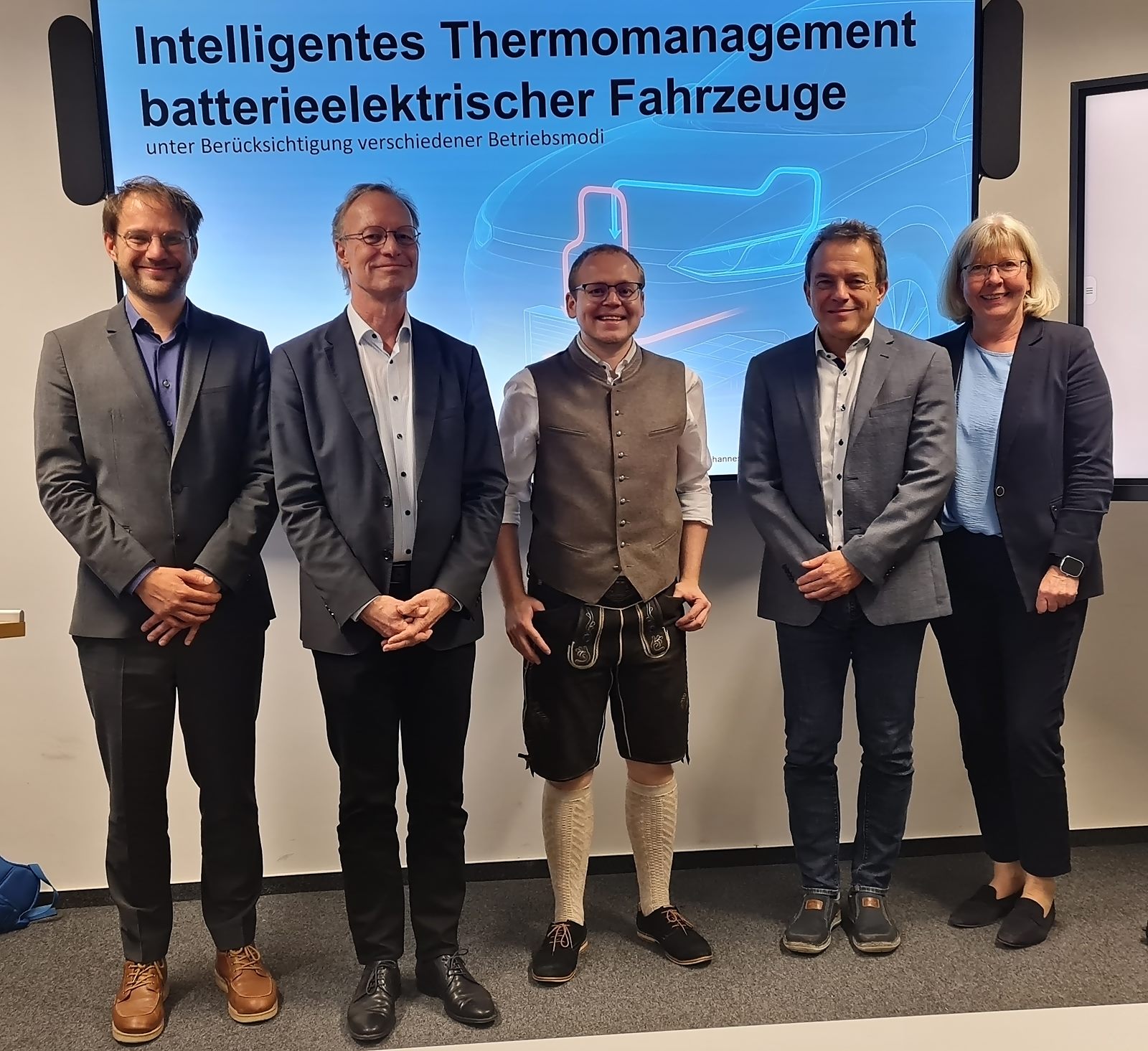
Dr.-Ing., PhD, Control and Cyber-Physical Systems
TU Darmstadt, in cooperation with the automotive industry · defended on October 31, 2025 · awarded magna cum laude
Developed the mode optimization strategy, built real-time models of battery, drivetrain, power electronics and heat pump, and validated it all in a prototype vehicle via rapid control prototyping, HIL and wind-tunnel tests. At the fast charger, the same strategy cut charging time by 37 %.
Team page, CCPS TU Darmstadt ↗ Defense, CCPS TU Darmstadt ↗ Dissertation ↗
Dipl.-Ing. (FH), Diploma, Automotive Electronics
Westsächsische Hochschule Zwickau, Germany · graduated with distinction
Finished the diploma in two years. Focus on electric drives, EMC, microcontroller systems and circuit design.
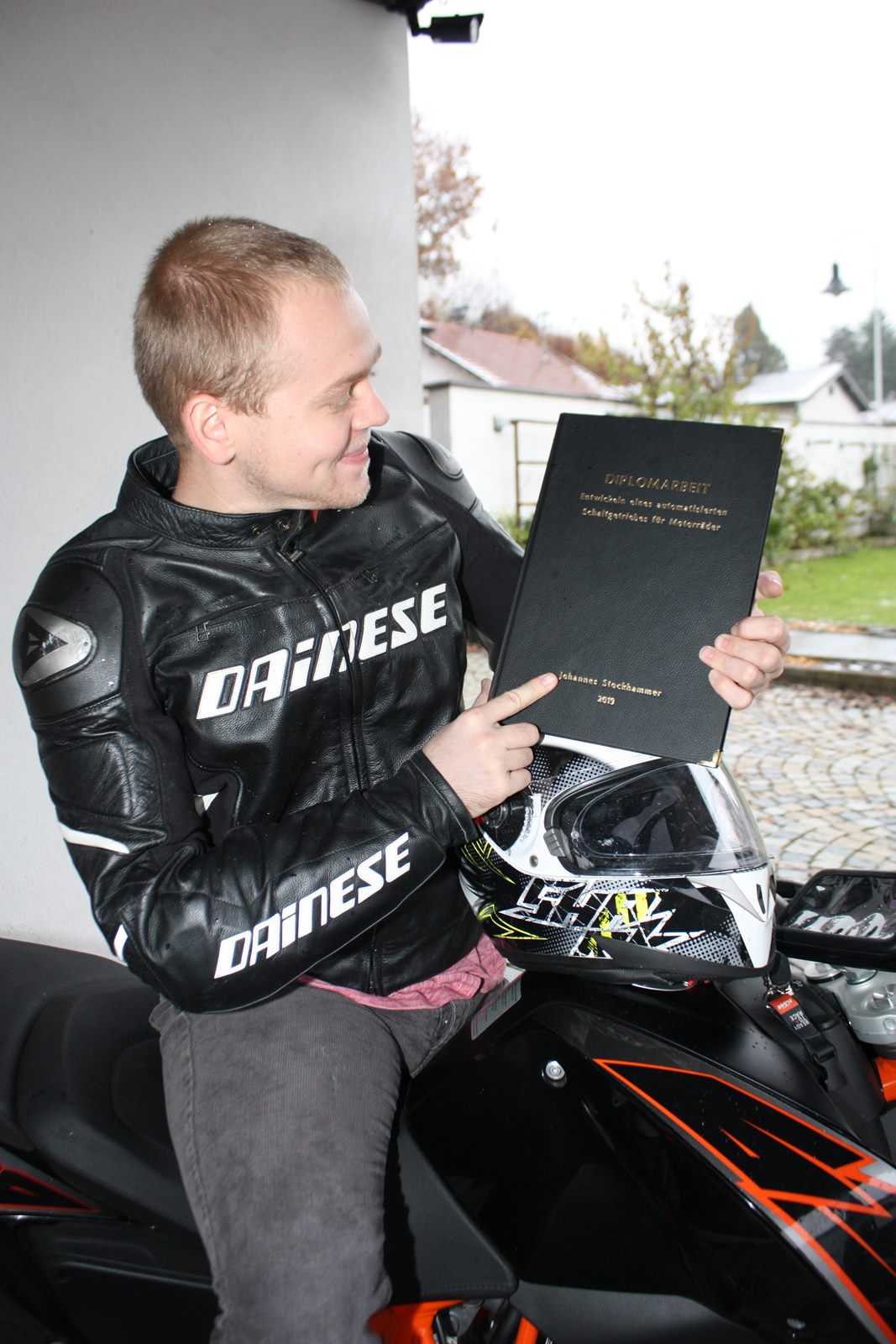
Diploma thesis at HC-Concepts Engineering, March–September 2019: control of an automated motorcycle gearbox — control-loop modeling, actuator sizing, sensors and embedded software.
OÖNachrichten, 2019 ↗ Tips, 2019 ↗ HTL Braunau ↗
Internship, 2018–2019 ↓
- 09/2018–02/2019 · AB Mikroelektronik: developed a validation and test control unit for vehicle headlamps — circuit design, LED drivers, microcontroller control, measurement analysis.
Second time in Nicaragua
HTL Braunau school partnership trip · 25 students · five weeks · partner school IPLS León
This time I came with cargo. We had prepared two CNC machines in Braunau and shipped them in a container together with 40 computers, electric motorbikes and e-bikes. On site in León we installed and commissioned the CNC machines in the school's new mechatronics center, set up the computers in the school network, and put the electric bikes into service for teaching — including sustainable charging.
Civilian service for development cooperation
ARGE Schulpartnerschaft, HTL Braunau · partner schools in León, Nicaragua and Lira, Uganda
A year of doing a bit of everything: I laid out every issue of the school magazine HTL up to date, looked after all publications of the school partnership, spent days rebuilding two CNC machines with retired workshop teacher Robert Handlechner for the partner school in León — the technicians doing the final acceptance were impressed — and helped organize the 2017 Nicaragua trip.
How I ended up in Zwickau: flipping through old issues of the school magazine for layout inspiration, I found out about the diploma program in automotive electronics there. First thought: I'm doing that.
Diploma project: an electric race kart
HTL Braunau · with Tom Rettenwander and Philipp Huber · Jugend Innovativ 2016: national finalist (30 of 550 projects) and recognition prize, category Sustainability
Where it started. The goal: an outdoor e-kart that can keep up with combustion karts at a fair price. I was responsible for drive and energy storage, modeled and designed the traction control, and built the electric drive system. Tom Rettenwander took on the mechanical design and did the hands-on work on the chassis, fitting every new part into a combustion kart's frame. Philipp Huber built the battery housings and kept the project documentation together, from the first concept to the final diploma thesis.
Three things made it work together: traction control with wheel-speed sensors on all four wheels, reaching into motor management so the wheels never spin; three-stage regenerative braking — starting when you lift off the throttle, then braking electrically with light pedal pressure, and only in stage three adding the hydraulic brake; and a LiFePO4 battery split into 24 modules, with every cell monitored by our own battery management system so it could swallow the high regen currents.
LiFePO4 in a school project, back in 2016.
Today it's in series-production EVs. Just saying. ☺
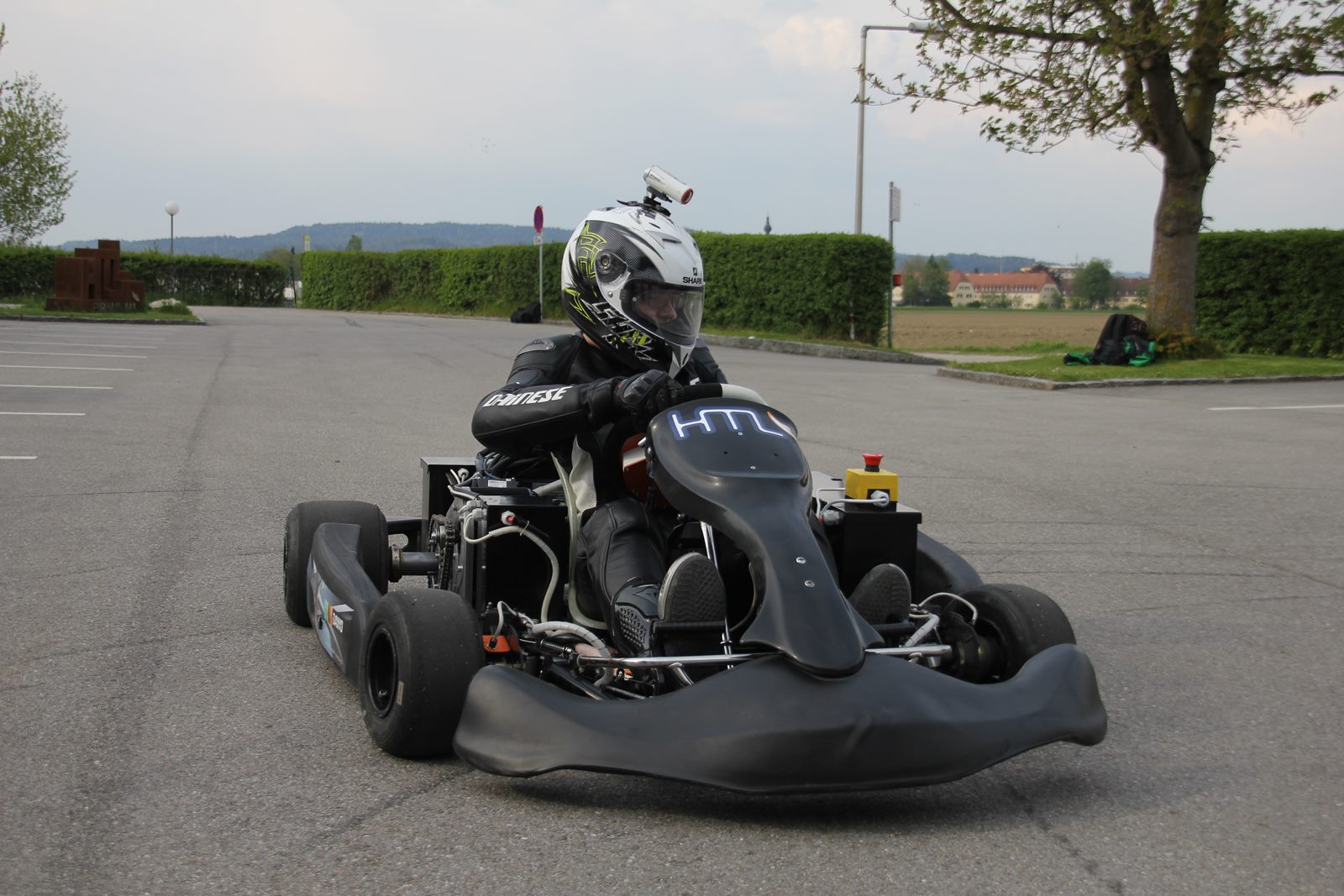
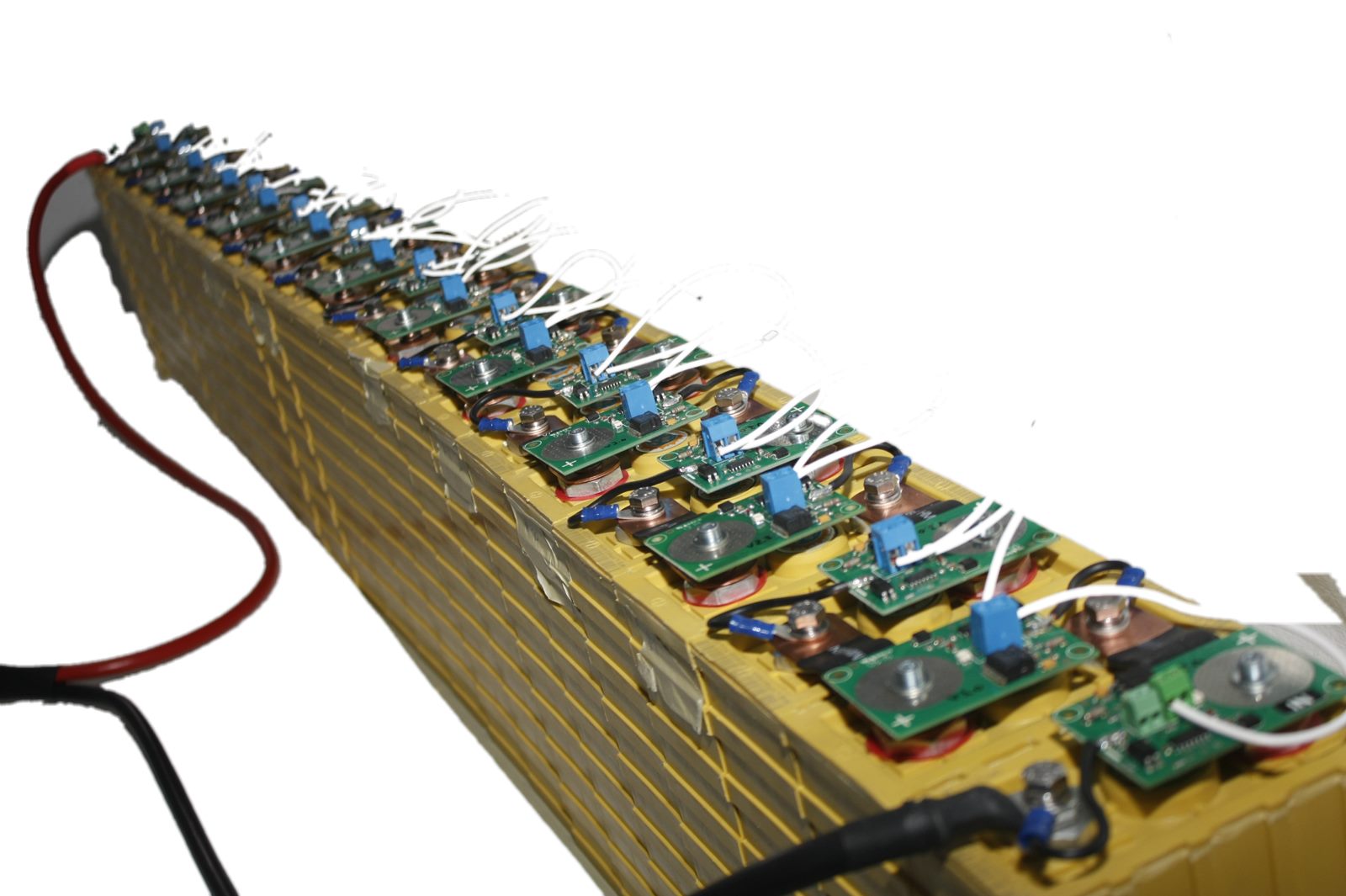
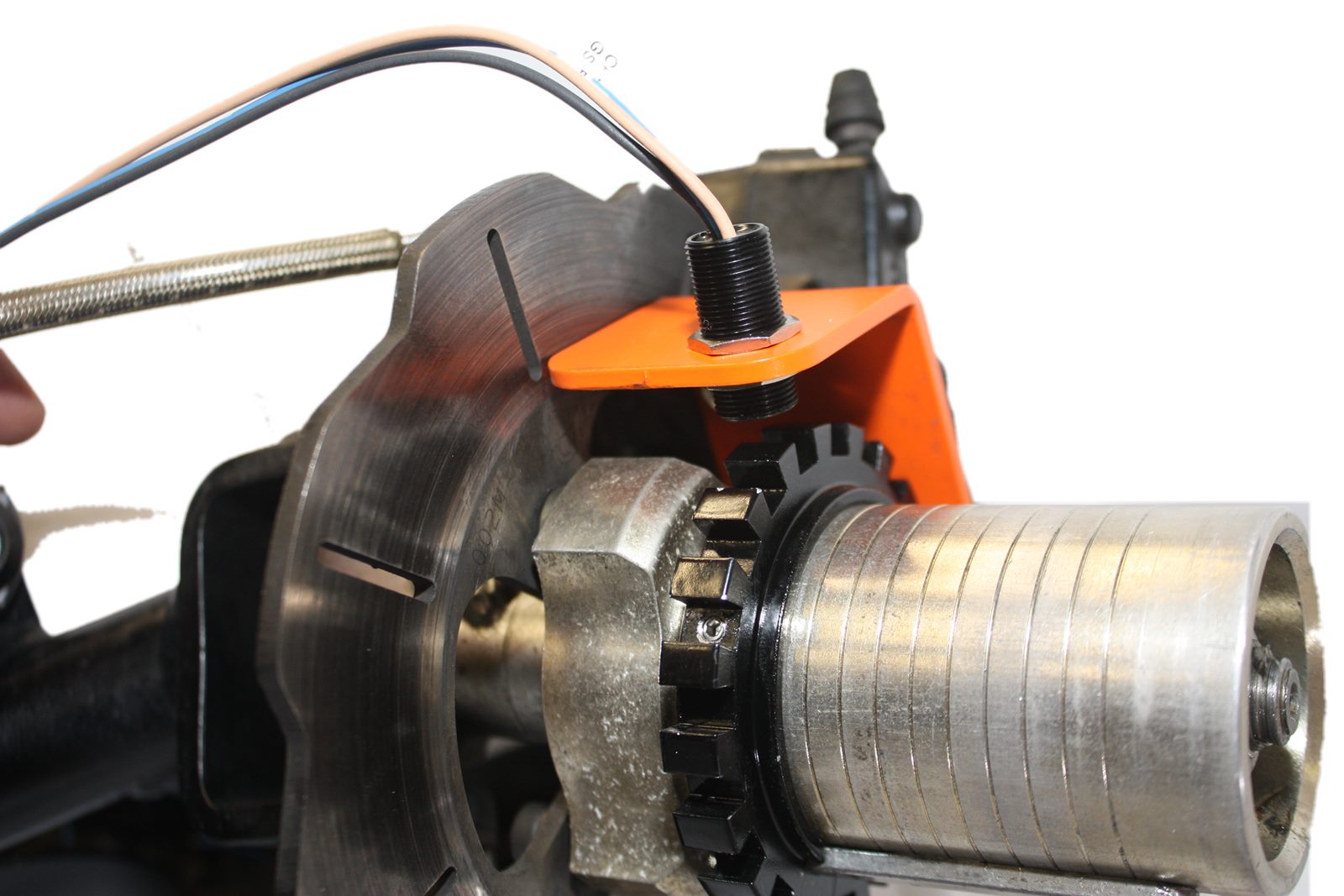
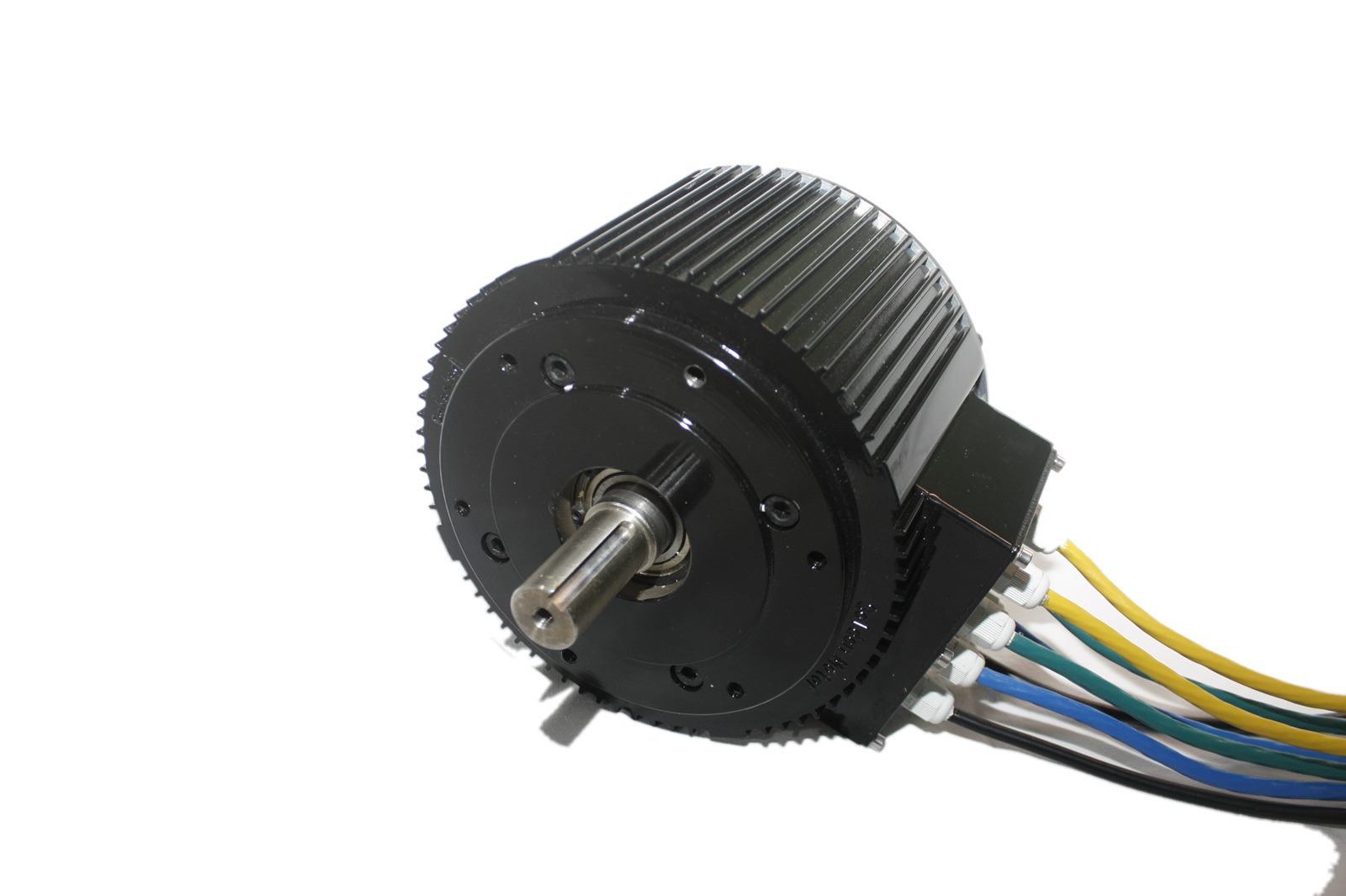
At the national final in Vienna we brought the kart along. The host took it for a lap in the event film, and our booth was busy the whole time. The chassis came from the Ampfing kart track.
Jugend Innovativ ↗ meinbezirk.at ↗ HTL Braunau brochure 2016 ↗ HTL up to date 87 ↗
First time in Nicaragua
HTL Braunau school partnership trip · 39 participants · five weeks · project “Light for the fishing families”
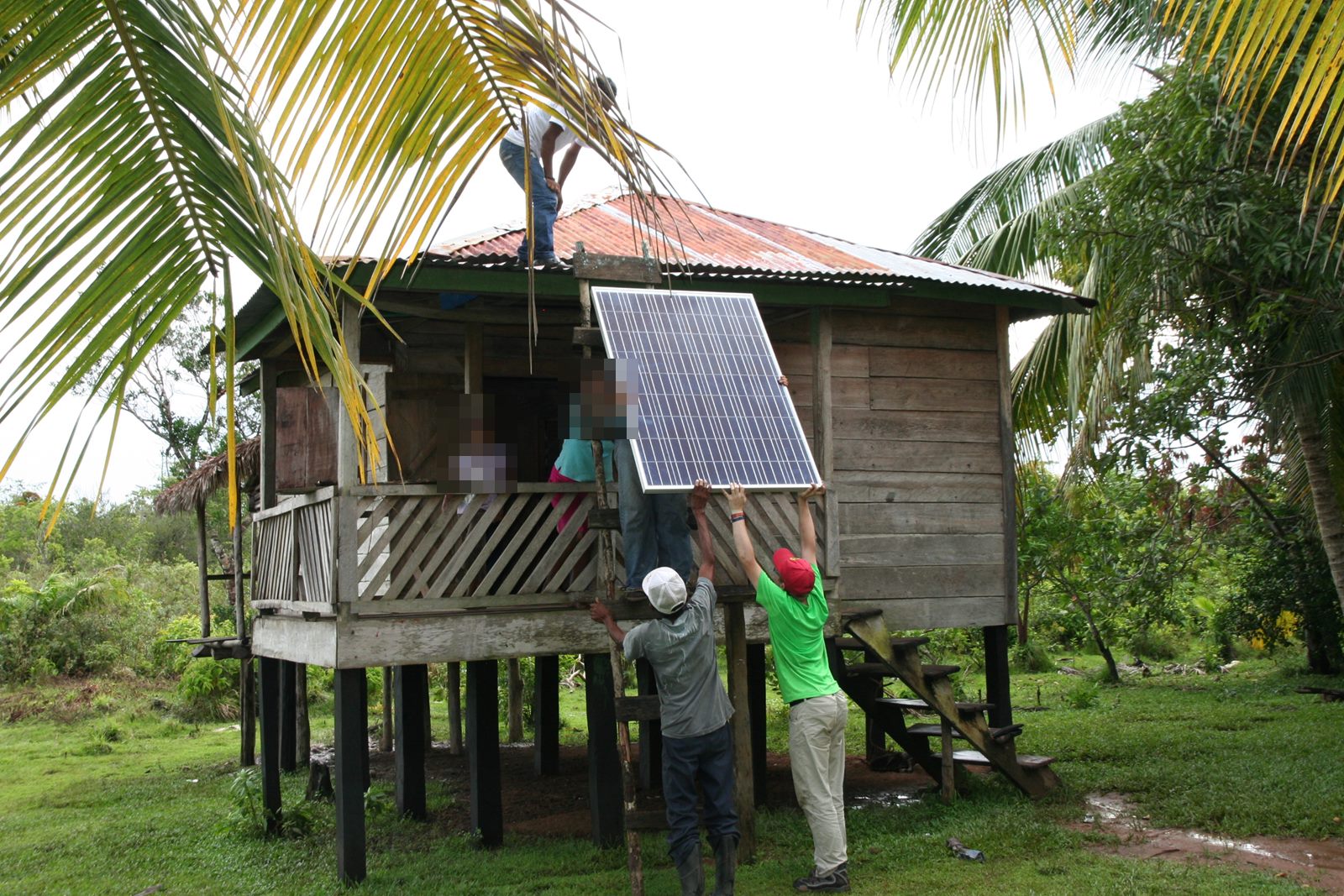
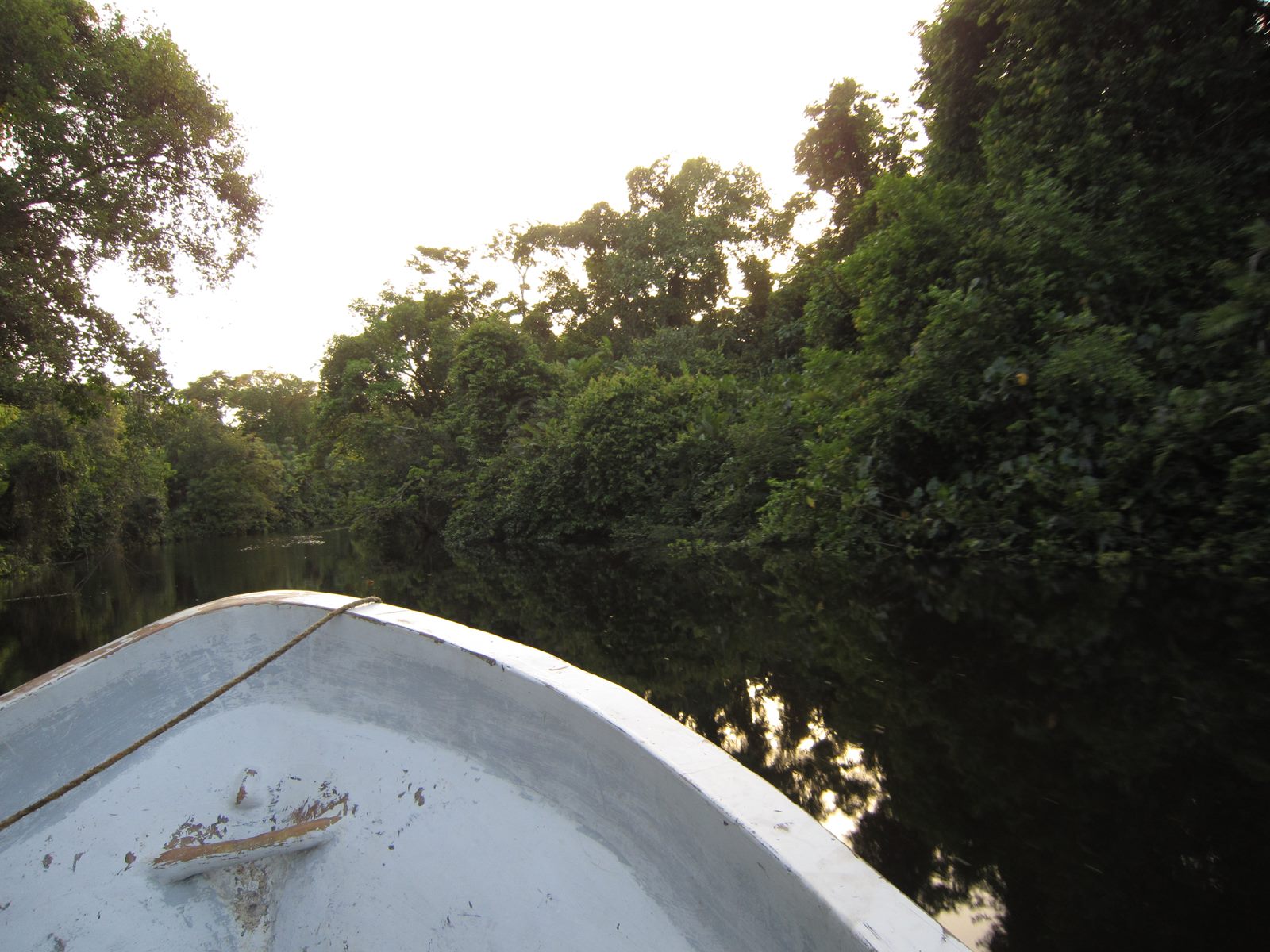
Two weeks travelling the country by bus, boat and small plane, then the project part: our team brought light to Kukalaya, a Miskito fishing village on a lagoon in the north-east. More than three tonnes of material went by bus and boat, and we installed 27 solar systems on houses built on stilts — and trained villagers to maintain and repair them.
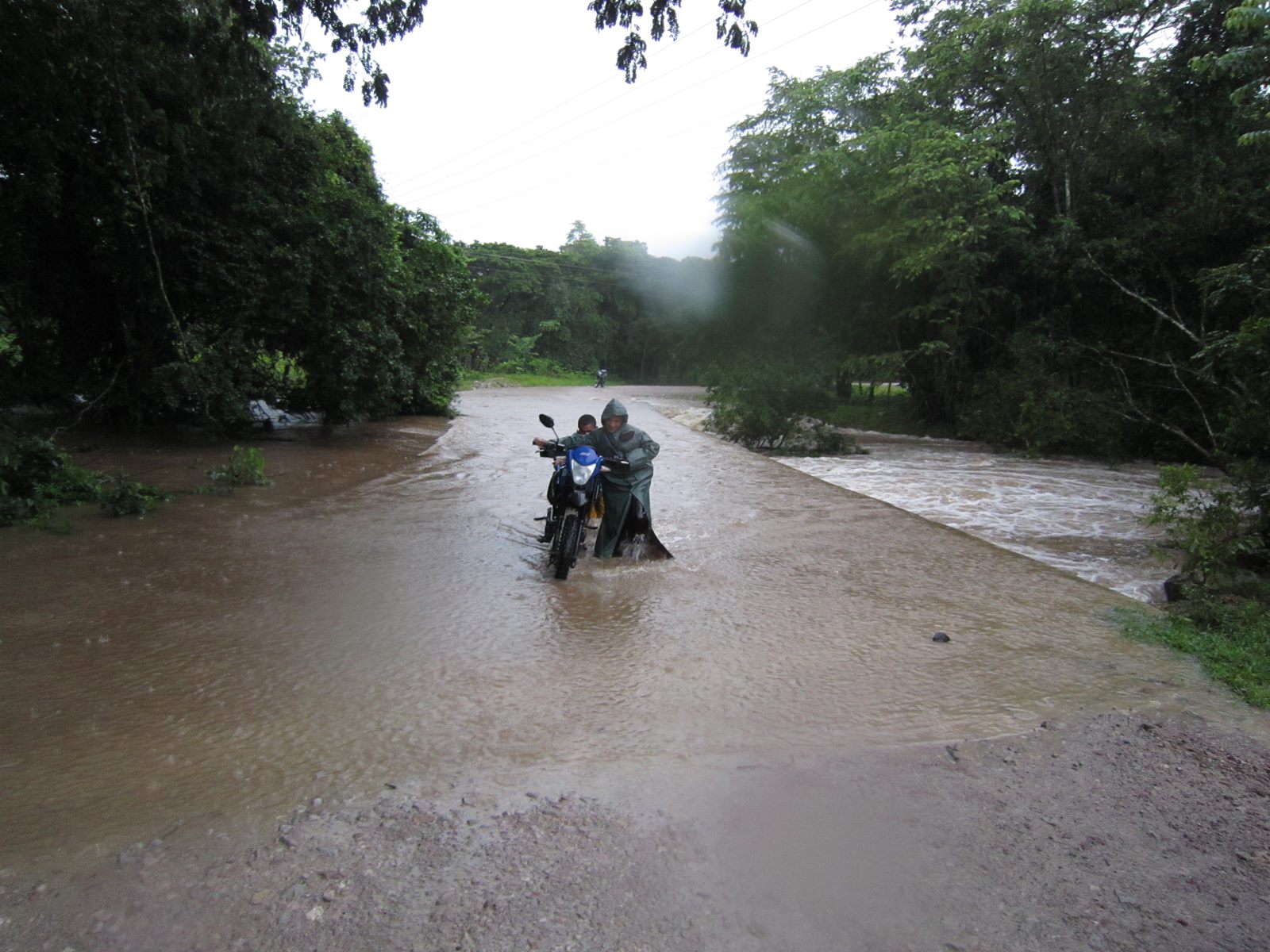
The trip there alone: four days on a bus, a burst tire, flooded roads, then five hours by boat through mangroves. Worth every hour.

Higher Technical Diploma & Matura, Electrical Engineering
HTL Braunau, Austria · graduated with distinction
Electric drives, power engineering, control and automation. Early hands-on experience in four internships at RDC-Bartol and HC-Concepts Engineering:
Internships, 2013–2015 ↓
- 07/2013 · HC-Concepts Engineering: tested the electric starter system on motorcycles — actuators and sensors integrated into the engine wiring harness, plus the hardware and software to run it.
- 07/2014 · HC-Concepts Engineering: built a test bench for a new starter-drive design — hardware and software development, electrical control setup, systematic analysis of starter-aging data, and a method to detect defects during test runs.
- 08/2015 · HC-Concepts Engineering: verification and validation of engines and transmissions — testing and simulating new electronic components, measuring mechanical components in the metrology lab, statistical analysis of the data.
- 09/2015–10/2015 · RDC-Bartol: clutch-engagement testing on high-performance engines — developed the hardware and software, implemented the required sensors, ran the validation tests.
Things I did just because
HTL Ball committee
Four years organizing the school ball of HTL Braunau, two of them in the four-person core team — the whole school turned into a ballroom across five floors and 13 bars, with around 2,600 to 3,000 guests.
meinbezirk.at · 2015 ↗ OÖNachrichten ↗ Ball 2015 photos ↗ Ball 2017 · HTL up to date 89 ↗
Layout & typesetting
From September 2016 to July 2017 I did the layout and typesetting of every issue of the school magazine HTL up to date — 3,500 to 4,000 printed copies each — plus the school partnership's annual report, including the special edition for ten years of the HTL Big Band.
HTL up to date, 2016–2018 ↓
- No. 87 · June 2016 · our e-kart at Jugend Innovativ ↗
- No. 88 · September 2016 · my layout ↗
- No. 89 · February 2017 · my layout ↗
- No. 90 · March 2017 · my layout ↗
- No. 91 · March 2017 · 10 years of the Big Band · my layout ↗
- No. 92 · June 2017 · my layout ↗
- No. 93 · October 2017 · the 2017 Nicaragua trip ↗
- No. 94 · February 2018 · this time as the interviewee ↗
- School partnership annual report 2016 · my layout ↗
Karting
Especially when it's a team effort. Fitting, for someone whose first big engineering project was an electric race kart.
Publications & patents
Full list on Google Scholar, ResearchGate and ORCID. Where a title appears in both languages: (orig.) is the officially published title, (my transl.) my own rendering, not an official translation.
Intelligentes Thermomanagement batterieelektrischer Fahrzeuge unter Berücksichtigung verschiedener Betriebsmodi: Modellierung, Analyse und dynamische Optimierung(orig.)
Intelligent thermal management of battery electric vehicles considering different operating modes(orig.)
TU Darmstadt, 2025 (published on TUprints 2026) · full text in German
BibTeX
@phdthesis{stockhammer2026intelligentes,
  title  = {Intelligentes Thermomanagement batterieelektrischer Fahrzeuge
            unter Ber{\"u}cksichtigung verschiedener Betriebsmodi},
  author = {Stockhammer, Johannes},
  year   = {2026},
  school = {Technical University Darmstadt},
  doi    = {10.26083/tuda-7633}
}
Mixed-integer predictive thermal management of battery electric vehicles: recursive mode optimization compared with combinatorial integral approximation
J. Stockhammer, A. Imsirovic, A. Himmel, R. Findeisen · the mode optimization strategy compared with CIA in simulation, trading solution quality against computation time
Mixed-integer model predictive control of battery electric vehicle thermal management using combinatorial integral approximation: experimental validation in a climate wind tunnel
J. Stockhammer, J. Lünenstraß, A. Himmel, R. Findeisen · validated on an instrumented vehicle in a climatic wind tunnel over two WLTC cycles at −7 °C, against a rule-based strategy
Predictive thermal management for fast charging of battery electric vehicles: coupled system model and vehicle validation
J. Stockhammer, S. Giraldo Zapata, A. Himmel, R. Findeisen · coupled model validated in a climatic wind tunnel at −10 °C and 30 °C; optimized preheating and precooling before fast charging, verified in the vehicle
Entwickeln eines automatisierten Schaltgetriebes für Motorräder(orig.)
Developing an automated gearbox for motorcycles(my transl.)
Westsächsische Hochschule Zwickau, 2019 · full text in German
Patents
13 patent publications in 10 patent families — vehicle thermal management, heat pumps, charging and energy control. Currently all filed in German (DPMA): (orig.) marks the official filed title, (my transl.) my own plain-English rendering — not an official translation. Open an abstract for the short version, or click a number for the full publication at the DPMA.
Predictive, route-based optimization of the thermal management system — recursive, mode-wise optimization problems. This is the mode optimization strategy.(my transl.)
Verfahren zur prädiktiven Optimierung eines Thermomanagementsystems eines batteriebetriebenen Elektrofahrzeugs the mode optimization strategy(orig.)
with R. Findeisen · published Apr 2026
Abstract
Die Erfindung betrifft ein Verfahren zur prädiktiven Bestimmung einer kostenoptimierten Abfolge von Stelltrajektorien (T*min) eines Thermomanagementsystems eines batteriebetriebenen Elektrofahrzeugs in Abhängigkeit von Routeninformationen (I) einer abzufahrenden Route (R), wobei das Thermomanagementsystem einen Kühlmittelkreislauf mit mindestens einem diskreten Stellglied und mindestens einem kontinuierlichen Stellgliedern aufweist, deren diskrete Stellgrößen und kontinuierliche Stellgrößen einstellbar sind, wobei jede Einstellkombination des mindestens einen diskreten Stellglieds einen Betriebsmodus (B1-3) des Thermomanagementsystems definiert. Erfindungsgemäß ist vorgesehen, dass sich die Stelltrajektorien (Tmin) aus Lösungen mehrerer Optimierungsprobleme ergeben, die rekursiv aufgestellt und jeweils für einen Betriebsmodus (B1-3) und in Bezug auf die kontinuierlichen Stellgrößen gelöst werden, wobei sich die kostenoptimierte Abfolge von Stelltrajektorien (T*min) aus der Abfolge von Stelltrajektorien (Tmin) ergibt, die die geringsten Gesamtkosten (Kges) verursachen. Ferner betrifft die Erfindung ein batteriebetriebenes Elektrofahrzeug, das mittels einer Auswerte- und Steuereinheit eingerichtet ist, um das Verfahren durchzuführen.
Official abstract via DPMA; reference numerals removed.
Charging controlled by a predicted battery and vehicle state, based on measured control variables and usage data.(my transl.)
Ladeverfahren, Ladesystem und Kraftfahrzeug(orig.)
with A. Imsirovic · published Jul 2026
Abstract
Die vorliegende Erfindung betrifft ein Ladeverfahren zum Laden einer Speichervorrichtung für elektrische Energie für ein Kraftfahrzeug durch ein Ladesystem, das Ladeverfahren umfassend: – Erfassen zumindest einer Regelgröße der Speichervorrichtung und/oder des Kraftfahrzeugs durch eine Erfassungsvorrichtung des Ladesystems, – Bereitstellen von zumindest einer Nutzungsvariable der Speichervorrichtung und/oder des Kraftfahrzeugs durch eine Datenschnittstelle des Ladesystems, – Prädiktion von zumindest einem Systemzustand der Speichervorrichtung und/oder des Kraftfahrzeugs durch eine Logikvorrichtung des Ladesystems auf Grundlage der zumindest einen erfassten Regelgröße und der zumindest einen bereitgestellten Nutzungsvariable, – Laden der Speichervorrichtung für elektrische Energie, wobei das Laden mittels einer Regelvorrichtung des Ladesystems auf Grundlage des zumindest einen prädiktiven Systemzustands geregelt wird. Ferner betrifft die Erfindung ein Ladesystem und ein Kraftfahrzeug.
Official abstract via DPMA; reference numerals removed.
Keeps the traction battery in the temperature window for maximum charging power, derived from state of charge and the battery's characteristic map.(my transl.)
Verfahren zur Temperaturregelung eines Antriebs-Energiespeichers(orig.)
with A. Imsirovic · published Jul 2026
Abstract
Die Erfindung betrifft ein Verfahren zur Temperaturregelung eines Antriebs-Energiespeichers, insbesondere einer Antriebsbatterie, eines Kraftfahrzeugs, insbesondere während eines Ladevorgangs, mit den Schritten: – Erfassen eines aktuellen Ladezustands (SoC) des Antriebs-Energiespeichers, – Erfassen einer aktuellen Energiespeichertemperatur (Btemp), – Erfassen einer aktuellen Energiespeicherspannung und/oder eines aktuellen Energiespeicherstroms, – Erfassen eines Energiespeicherkennfelds (Bkenn) des Energiespeichers, – Ermitteln eines optimalen Temperaturbereichs (TB) für eine maximale Ladeleistung (Pmax) in Abhängigkeit des Ladezustands (SoC) und des Energiespeicherkennfelds (Bkenn), wobei eine untere Temperaturgrenze (TUG) und eine obere Temperaturgrenze (TOG) definiert wird und- Regeln der Energiespeichertemperatur (Btemp) auf den ermittelten Temperaturbereich (TB) bei Über- oder Unterschreitung des Temperaturbereichs (TB) mittels einer Temperierungseinrichtung des Kraftfahrzeugs.
Official abstract via DPMA; reference numerals removed.
Battery heating that takes into account operating states affecting the drivetrain's power demand, checked before and during the drive.(my transl.)
Verfahren zur Steuerung der Beheizung einer Batterie eines Fahrzeugs(orig.)
published Jul 2026
Abstract
Die Erfindung betrifft ein Verfahren zur Steuerung der Beheizung einer Batterie eines Fahrzeugs, wobei die Batterie einen elektrischen Fahrantrieb des Fahrzeugs mit elektrischer Energie versorgt. Vor dem Beginn und/oder während der Fahrt wird das Vorliegen wenigstens eines vordefinierten Betriebszustands des Fahrzeugs, der sich auf die elektrische Leistungsaufnahme des elektrischen Fahrantrieb auswirkt, mittels wenigstens eines Sensors und/oder eines ausgelesenen Steuerungssignals des Fahrzeugs überprüft und das Ergebnis der Überprüfung bei einer Steuerung einer Beheizung der Batterie berücksichtigt.
Official abstract via DPMA; reference numerals removed.
Heat pump setup that uses coolant hoses and traction component housings as air heat exchangers to heat the cabin.(my transl.)
Wärmepumpeneinrichtung und Verfahren zur Innenraumbeheizung eines Elektrofahrzeugs sowie Fahrzeug(orig.)
with T. S. Schmidt · published Oct 2025
Abstract
Die Erfindung betrifft eine Wärmepumpeneinrichtung, die zur Innenraumbeheizung eines Elektrofahrzeugs ausgebildet ist. Erfindungsgemäß besitzt die Wärmepumpeneinrichtung einen Kühlmittelteilkreislauf, der zumindest abschnittsweise eine Verschlauchung aufweist, die als Luft-Wärmeübertrager ausgebildet ist, eine Kühlmittelpumpe, mindestens eine Traktionskomponente mit einer Einhausung, die als Luft-Wärmeübertrager ausgebildet ist, und einem Wärmetauscher, der zur Abfuhr von Wärme aus dem Kühlmittelteilkreislauf ausgebildet ist. Ferner betrifft die Erfindung ein Verfahren zur Erzeugung eines Wärmeflusses zur Innenraumbeheizung eines Elektrofahrzeugs mit einer solchen Wärmepumpeneinrichtung. Erfindungsgemäß erfolgt das Feststellen einer Heizanforderung, das Ansteuern der Kühlmittelpumpe zur Erzeugung einer Kühlmittelströmung, wobei die Kühlmittelströmung die mindestens eine Traktionskomponente durchströmt, und das Abführen von aufgenommener Wärme über den Wärmetauscher. Schließlich betrifft die Erfindung ein Fahrzeug, das erfindungsgemäß eine Wärmepunmpeinrichtung besitzt, die zur Durchführung des Verfahrens ausgebildet ist.
Official abstract via DPMA; reference numerals removed.
Hybrid battery cooling for DC fast charging: software splits the coolant flow between two heat exchangers to cool the battery as hard as possible.(my transl.)
Hybride Batteriekühlung für DC-Schnellladen(orig.)
published Sep 2025
Abstract
Kühlsystem für eine Traktionsbatterie eines batteriebetriebenen Fahrzeugs, mit einem ersten Kühlkreislauf mit einem ersten Wärmeübertrager, mit einem ersten Kühlmittel-Massenstrom und einer ersten Fördereinrichtung für das Kühlmittel im ersten Kühlkreislauf und einem zweiten Wärmeübertrager und einer zweiten Fördereinrichtung für das Kühlmittel im ersten Kühlkreislauf, einem zweiten Kühlkreislauf, dadurch gekennzeichnet, dass eine spezifische Softwarekomponente, die anhand von aktuellen Umgebungs- und Betriebsbedingungen des batteriebetriebenen Fahrzeugs den ersten Kühlmittel-Massenstrom durch Verstellung der ersten Fördereinrichtung und/oder der zweiten Fördereinrichtung in einen ersten Kühlmittel-Massenteilstrom und einen zweiten Kühlmittel-Massenteilstrom aufteilt, so dass die Traktionsbatterie maximal gekühlt wird.
Official abstract via DPMA; reference numerals removed.
Fleet telematics on electrical and thermal energy reserves after charging, used to optimize charging targets at a station for the same or other vehicles.(my transl.)
Verfahren zum Erfassen und Verwenden von Telematikdaten von Fahrzeugen(orig.)
published Apr 2025
Abstract
Die Erfindung betrifft ein Verfahren zum Erfassen und Verwenden von Telematikdaten von Fahrzeugen, insbesondere Elektrofahrzeugen oder Hybridfahrzeugen, um eine, insbesondere fahrzeugübergreifende, Regelung von Ladevorgängen an Ladestationen zu ermöglichen, aufweisend: – Erfassen von elektrischen Energiereserven (E1_load) und von thermischen Energiereserven (E2_load) des Fahrzeuges nach einem Ladevorgang an einer Ladestation, – Übermitteln der erfassten elektrischen Energiereserven (E1_load) und thermischen Energiereserven (E2_load) an eine externe Backendvorrichtung, – Erfassen, insbesondere dynamisches Erfassen, von elektrischen Energiereserven (E1_dyn) und von thermischen Energiereserven (E2_dyn) des Fahrzeuges im laufenden Betrieb des Fahrzeuges nach dem Ladevorgang, – Übermitteln, insbesondere ortsaufgelöstes Übermitteln, der erfassten elektrischen Energiereserven (E1_dyn) und thermischen Energiereserven (E2_dyn) an die externe Backendvorrichtung, – Verarbeiten der übermittelten elektrischen Energiereserven (E1_load, E1_dyn) und thermischen Energiereserven (E2_load, E2_dyn), insbesondere durch die externe Backendvorrichtung, – Bestimmen von optimierten, vorzugsweise vergrößerten, elektrischen Energiereserven (E1_soll) und/oder von optimierten, vorzugsweise vergrößerten, thermischen Energiereserven (E2_soll) für einen Ladevorgang an der Ladestation für das gleiche und/oder ein anderes Fahrzeug.
Official abstract via DPMA; reference numerals removed.
Cabin climate control without sun or ambient temperature sensors: a server-side digital map supplies settings based on time, position and orientation.(my transl.)
Verfahren zur Innenraumklimatisierung und Fahrzeug zur Durchführung des Verfahrens(orig.)
with K. Helms · published Mar 2025
Abstract
Dier Erfindung betrifft ein Verfahren zur Innenraumklimatisierung eines Fahrzeugs, das in Bezug auf einen Sonnenintensitätssensor und/oder einen Außentemperatursensor sensorfrei ausgebildet ist, zum Datenaustausch mit einem fahrzeugexternen Server verbindbar ist und eine Klimaeinrichtung zur Einstellung des Innenraumklimas aufweist. Ferner betrifft die Erfindung ein Fahrzeug, das in Bezug auf einen Sonnenintensitätssensor und/oder einen Außentemperatursensor sensorfrei ausgebildet ist, zum Datenaustausch mit einem fahrzeugexternen Server verbindbar ist und eine Klimaeinrichtung zur Einstellung des Innenraumklimas aufweist. Um ein Verfahren und ein Fahrzeug vorzuschlagen, womit die Innenraumklimatisierung energieschonender und damit kostenschonender durchführbar ist, werden erfindungsgemäß folgende Schritte vorgeschlagen: Bereitstellen einer digitalen Karte auf dem Server, wobei die digitale Karte ortsabhängige und zeitabhängige Betriebsparameter der Klimaeinrichtung des Fahrzeugs umfasst, wobei die Betriebsparameter eine bedarfsgerechte Einstellung des Innenraumklimas im Fahrzeug erlauben; Übermitteln von Daten in Bezug auf die Zeit, die Position und die Orientierung des Fahrzeugs an den Server; Ermitteln der Betriebsparameter der Klimaeinrichtung des Fahrzeugs mittels des Servers in Abhängigkeit der Zeit, der Position und der Orientierung des Fahrzeugs; Übermitteln der Betriebsparameter der Klimaeinrichtung an das Fahrzeug; Einstellen der Klimaeinrichtung entsprechend der vom Server übermittelten Betriebsparameter.
Official abstract via DPMA; reference numerals removed.
Deliberately generating electrical losses in drivetrain components in certain operating states — the drivetrain as a heater.(my transl.)
Verfahren zum Betreiben eines elektrischen Antriebsstrangs(orig.)
with S. Solterbeck · published Feb 2025
Abstract
Die Erfindung betrifft ein Verfahren zum Betreiben eines elektrischen Antriebsstrangs, der zumindest eine elektrische Maschine zum Antrieb eines Kraftfahrzeuges sowie weitere elektrische Komponenten zur Regelung und zum Betrieb der elektrischen Maschine, eine Traktionsbatterie und einen Kühlkreislauf zur Temperierung der Traktionsbatterie, der elektrischen Maschine und der elektrischen Komponenten aufweist; wobei das Verfahren umfasst, dass der Antriebsstrang in bestimmten Betriebszuständen so betrieben wird, dass in zumindest einer der elektrischen Komponenten gezielt elektrische Verluste erzeugt werden.
Official abstract via DPMA; reference numerals removed.
Method for controlling the secondary circuit of a heat pump(orig.)
Verfahren zur Regelung des Sekundärkreislaufs einer Wärmepumpe(orig.)
Harvesting ambient and component waste heat in the coolant loop, with coolant temperatures controlled so the heat pump picks up the maximum heat. Filed in Germany, internationally (WO), in Europe and the US.
with T. S. Schmidt · published Aug 2024
Abstract
Verfahren zur Regelung des Sekundärkreislaufs einer Wärmepumpe, in dem ein Kühlmittel zirkuliert, bei dem in einem ersten Verfahrensschritt (I) Wärme von der Umgebung mithilfe wenigstens eines Luft-Kühlmittel Wärmeübertragers, der von dem Kühlmittel und von der Umgebungsluft durchströmt wird, in das Kühlmittel abgegeben wird, das Kühlmittel bei einer Temperatur (T2) wenigstens zu einem elektrischen oder elektronischen Bauteil oder Aggregat geleitet wird und in einem zweiten Verfahrensschritt (II) Wärme von dem Bauteil oder Aggregat in das Kühlmittel abgegeben wird, das Kühlmittel anschließend bei einer Temperatur (T3) wenigstens zu einem Kühlmittel-Kältemittel Wärmeübertrager weitergeleitet und in einemdritten Verfahrensschritt (III) dem Kühlmittel durch den Kühlmittel-Kältemittel Wärmeübertrager Wärme entzogen und einem Verbraucher zugeführt wird, und die Temperaturen T1 oder/und T2 so geregelt werden, dass die Wärmeaufnahme in Verfahrensschritt (III) maximal ist, und das im Kühlmittel-Kältemittel Wärmeübertrager abgekühlte Kühlmittel zurück zu dem Luft-Kühlmittel Wärmeübertrager geleitet wird.
English (WO/US): The method relates to a method for controlling the secondary circuit of a heat pump in which a coolant circulates, wherein in a first method step (I) heat is transferred from the environment to the coolant with the aid of at least one air-coolant heat exchanger through which the coolant and the ambient air flows, the coolant is conveyed at least to an electric or electronic component or unit at a temperature (T2) and in a second method step (II) heat is transferred from the component or unit to the coolant, the coolant is then forwarded at least to a coolant-refrigerant heat exchanger at a temperature (T3) and in a third method step (III) heat is removed from the coolant by the coolant-refrigerant heat exchanger and fed to a consumer, and the temperatures T1 or/and T2 are controlled such that the heat absorption is at a maximum in method step (III), and the coolant cooled in the coolant-refrigerant heat exchanger is conveyed back to the air-coolant heat exchanger.
Official abstract via DPMA; reference numerals removed.
What I work with
Certified for that. Yes, even the propane one. 🔥
Want to build something that moves?
Thermal management, fast charging, mode-dependent optimization, embedded controls — just say hi.
Impressum · Legal notice
Information pursuant to § 5 DDG (German Digital Services Act)
Johannes Stockhammerc/o MDC#1531
Welserstraße 3
87463 Dietmannsried
Germany
Contact
Responsible for content pursuant to § 18 (2) MStV
Johannes Stockhammer, address as above.
Note
This is a private website. Its contents reflect solely my personal views and not those of my employer.
Use of AI
The design, code and parts of the text of this site were created with the help of an AI assistant (Claude, Anthropic). I have reviewed all content and bear editorial responsibility.
Liability for content
The content of this site was created with care. However, I cannot guarantee its accuracy, completeness or timeliness. Under §§ 7 to 10 DDG, I am responsible for my own content under general law, but I am not obliged to monitor third-party information that is transmitted or stored.
Liability for links
This site contains links to external third-party websites whose content I have no control over. The respective provider is always responsible for that content. If I become aware of any legal violations, I will remove such links immediately.
Copyright
The texts and graphics on this site are protected by copyright. All illustrations and icons were drawn specifically for this site; no third-party images, logos or stock photos are used. The portrait and all other photos are my own; faces of uninvolved people have been made unrecognizable. The dissertation is published on TUprints under CC BY-NC 4.0; the terms stated there apply.
Sources and licenses
Fonts: Poppins (Indian Type Foundry) and the math symbols from STIX, both under the SIL Open Font License 1.1. The handwriting style uses only fonts already installed on your device. Equations rendered with matplotlib. Patent abstracts: German Patent and Trade Mark Office, DEPATISnet. Press articles, school magazines and annual reports are linked only; all rights remain with their respective publishers.
Deutsche Fassung (maßgeblich) ↓
In case of doubt, the German version applies. · Im Zweifel gilt die deutsche Fassung.
Angaben gemäß § 5 DDG
Johannes Stockhammerc/o MDC#1531
Welserstraße 3
87463 Dietmannsried
Deutschland
Kontakt
Verantwortlich für den Inhalt nach § 18 Abs. 2 MStV
Johannes Stockhammer, Anschrift wie oben.
Hinweis
Dies ist eine private Website. Die Inhalte geben ausschließlich meine persönliche Meinung wieder und nicht die meines Arbeitgebers.
Hinweis zum Einsatz von KI
Gestaltung, Programmierung und Teile der Texte dieser Seite sind mit Unterstützung eines KI-Assistenten (Claude, Anthropic) entstanden. Alle Inhalte wurden von mir geprüft; ich trage die redaktionelle Verantwortung.
Haftung für Inhalte
Die Inhalte dieser Seite wurden mit Sorgfalt erstellt. Für Richtigkeit, Vollständigkeit und Aktualität kann ich jedoch keine Gewähr übernehmen. Nach §§ 7 bis 10 DDG bin ich für eigene Inhalte nach den allgemeinen Gesetzen verantwortlich, jedoch nicht verpflichtet, übermittelte oder gespeicherte fremde Informationen zu überwachen.
Haftung für Links
Diese Seite enthält Links zu externen Websites Dritter, auf deren Inhalte ich keinen Einfluss habe. Für diese Inhalte ist stets der jeweilige Anbieter verantwortlich. Bei Bekanntwerden von Rechtsverletzungen entferne ich entsprechende Links umgehend.
Urheberrecht
Texte und Grafiken dieser Seite unterliegen dem Urheberrecht. Alle Illustrationen und Symbole wurden eigens für diese Seite gezeichnet; es werden keine fremden Bilder, Logos oder Stockfotos verwendet. Das Porträtfoto und alle weiteren Fotos sind meine eigenen; Gesichter unbeteiligter Personen wurden unkenntlich gemacht. Die Dissertation ist über TUprints unter CC BY-NC 4.0 veröffentlicht; es gelten die dort genannten Bedingungen.
Quellen und Lizenzen
Schriften: Poppins (Indian Type Foundry) und die Formelzeichen aus STIX, beide unter der SIL Open Font License 1.1. Die Handschrift nutzt ausschließlich Schriften, die auf Ihrem Gerät bereits installiert sind. Formeln erzeugt mit matplotlib. Patent-Kurzfassungen: Deutsches Patent- und Markenamt, DEPATISnet. Presseartikel, Schulzeitungen und Jahresberichte sind nur verlinkt; die Rechte liegen bei den jeweiligen Herausgebern.
Datenschutz · Privacy policy
1. Controller
The controller within the meaning of the GDPR is Johannes Stockhammer; see the legal notice for contact details.
2. Hosting
This website is hosted on Cloudflare Pages (Cloudflare, Inc., 101 Townsend St., San Francisco, CA 94107, USA). When you visit, Cloudflare processes technically necessary data such as your IP address, date and time, the page requested and browser information in order to deliver the site and protect it against attacks. The legal basis is Art. 6(1)(f) GDPR (legitimate interest in secure and stable operation). Transfers to the USA are based on the EU-U.S. Data Privacy Framework or standard contractual clauses.
3. No third-party content
Fonts, equations and graphics are embedded directly in this page. No content is loaded from external servers, and none of your data is passed to third parties such as Google. Links to external sites (e.g. DPMA, Google Scholar, LinkedIn) only become active when you click them; from then on, the privacy policy of the respective provider applies.
4. Local storage
If you switch between light and dark mode, this setting is stored only in your browser (localStorage). It is never sent to me; storing it is strictly necessary to provide the function you requested (§ 25(2) No. 2 TDDDG).
5. Contact by email
If you email me, I process your details to handle your request (Art. 6(1)(b) or (f) GDPR) and delete them once they are no longer needed.
6. No analytics, no tracking
This website uses no cookies for analytics or advertising and no tracking tools.
7. Your rights
You have the right of access, rectification, erasure, restriction of processing, data portability and objection (Art. 15–21 GDPR). You may also lodge a complaint with a data protection supervisory authority.
Last updated: September 2026
Deutsche Fassung (maßgeblich) ↓
In case of doubt, the German version applies. · Im Zweifel gilt die deutsche Fassung.
1. Verantwortlicher
Verantwortlich im Sinne der DSGVO ist Johannes Stockhammer, Kontaktdaten siehe Impressum.
2. Hosting
Diese Website wird bei Cloudflare Pages gehostet (Cloudflare, Inc., 101 Townsend St., San Francisco, CA 94107, USA). Beim Aufruf verarbeitet Cloudflare technisch notwendige Daten wie IP-Adresse, Datum und Uhrzeit, aufgerufene Seite und Browserinformationen, um die Seite auszuliefern und vor Angriffen zu schützen. Rechtsgrundlage ist Art. 6 Abs. 1 lit. f DSGVO (berechtigtes Interesse an einem sicheren und stabilen Betrieb). Eine Übermittlung in die USA erfolgt auf Grundlage des EU-U.S. Data Privacy Framework bzw. von Standardvertragsklauseln.
3. Keine Inhalte von Drittanbietern
Schriftarten, Formeln und Grafiken sind direkt in diese Seite eingebettet. Es werden keine Inhalte von externen Servern nachgeladen, und es findet keine Übermittlung Ihrer Daten an Drittanbieter wie Google statt. Links zu externen Seiten (z. B. DPMA, Google Scholar, LinkedIn) werden erst aktiv, wenn Sie sie anklicken; ab dann gelten die Datenschutzbestimmungen des jeweiligen Anbieters.
4. Lokale Speicherung
Wenn Sie zwischen hellem und dunklem Design wechseln, wird diese Einstellung ausschließlich in Ihrem Browser gespeichert (localStorage). Die Information wird nicht an mich übermittelt; die Speicherung ist unbedingt erforderlich, um die von Ihnen gewünschte Funktion umzusetzen (§ 25 Abs. 2 Nr. 2 TDDDG).
5. Kontakt per E-Mail
Wenn Sie mir eine E-Mail schreiben, verarbeite ich Ihre Angaben zur Bearbeitung Ihrer Anfrage (Art. 6 Abs. 1 lit. b bzw. f DSGVO) und lösche sie, sobald sie nicht mehr benötigt werden.
6. Keine Analyse, kein Tracking
Diese Website verwendet keine Cookies zu Analyse- oder Werbezwecken und keine Tracking-Tools.
7. Ihre Rechte
Sie haben das Recht auf Auskunft, Berichtigung, Löschung, Einschränkung der Verarbeitung, Datenübertragbarkeit sowie Widerspruch (Art. 15–21 DSGVO). Zudem können Sie sich bei einer Datenschutz-Aufsichtsbehörde beschweren.
Stand: September 2026